Arsenal FC Net Worth 2022 is a fascinating topic that delves into the intricate world of football finance. From the club’s rich history to its present-day operations, Arsenal FC’s net worth has undergone significant transformations over the years. With a dedicated fanbase and a reputation for excellence, the club’s financial journey has been shaped by various factors, including broadcasting deals, sponsorships, and strategic investments.
As one of the most successful clubs in English football history, Arsenal FC’s financial performance is a topic of immense interest, particularly in the context of the Premier League. The club’s financial trajectory has been influenced by a series of significant events, including changes in broadcasting deals, shifts in sponsorship partnerships, and strategic investments in infrastructure and player development. This comprehensive analysis aims to explore the intricate dynamics of Arsenal FC’s net worth, shedding light on the factors that have contributed to its successes and challenges.
Arsenal FC Net Worth 2022

Arsenal Football Club, one of the most iconic and storied clubs in the English Premier League, has been navigating the complex and ever-changing landscape of football finance for decades. With a rich history spanning over 130 years, the club has experienced its fair share of triumphs and tribulations, with its net worth reflecting the ebbs and flows of the sport.
This article provides a historical perspective on Arsenal’s financial performance from 2000 to 2022, highlighting key milestones and challenges, and shedding light on the impact of the Premier League’s broadcasting deals on the club’s net worth.
Financial Performance: 2000-2022
During the 2000s, Arsenal experienced a period of unprecedented success, culminating in the coveted Premier League and FA Cup double in 2002. This success was mirrored in the club’s finances, with revenue increasing significantly. The club’s turnover, derived from a combination of matchday revenue, broadcasting rights, and commercial sponsorships, rose from £63 million in 2000 to £245 million in 2008.
However, this success was not without its challenges. The club’s increased spending on player transfers and wages led to a significant increase in expenses, ultimately resulting in a substantial financial loss.
- Turnover 2000: £63 million
- Turnover 2008: £245 million
- Loss 2006: £49.9 million
The financial struggles of Arsenal during the mid-to-late 2000s were exacerbated by the club’s reliance on debt financing. Between 2003 and 2006, the club’s debt rose from £85 million to £226 million, largely due to the acquisition of Highbury Stadium and the financing of player transfers.
Impact of Premier League’s Broadcasting Deals
The Premier League’s broadcasting rights have had a profound impact on the club’s net worth. In 2001, the Premier League secured a £1.1 billion broadcasting deal with Sky Sports and ITV, which significantly increased the revenue available to its member clubs. This deal was followed by a series of lucrative broadcasting agreements, including a £3.03 billion deal with Sky Sports and BT Sport in 2015.
| Year | Broadcasting Deal (£) |
|---|---|
| 2001 | £1.1 billion |
| 2006 | £670 million |
| 2015 | £3.03 billion |
The increased revenue generated by the Premier League’s broadcasting deals has had a significant impact on Arsenal’s net worth. Between 2000 and 2022, the club’s revenue from broadcasting rights increased from £12 million to £133 million, contributing to a significant increase in the club’s net worth.
Conclusion
In conclusion, Arsenal FC’s net worth has been significantly impacted by the club’s financial performance and the Premier League’s broadcasting deals. While the club has experienced periods of significant success and financial growth, it has also faced challenges in managing its finances and relying on debt financing. The Premier League’s broadcasting deals have provided a significant source of revenue for the club, contributing to a substantial increase in its net worth.
Arsenal FC Revenue Streams 2022

Arsenal FC is one of the biggest football clubs in the world, with a rich history of success both on and off the pitch. The club’s financial performance is closely watched by fans and analysts alike, as it provides insight into the club’s stability, competitiveness, and ability to invest in the team. In this section, we’ll take a closer look at the club’s revenue streams in 2022, including ticket sales, broadcasting rights, and sponsorships.In 2022, Arsenal FC reported significant revenue growth, with total revenue reaching a record high of £487 million.
This increase can be attributed to several factors, including the club’s improved performance on the pitch, the success of the Emirates Stadium, and increased revenue from broadcasting rights. Here’s a breakdown of the club’s top revenue streams in 2022:
Matchday Revenue: Ticket Sales and Sponsorships, Arsenal fc net worth 2022
Ticket sales and sponsorships generated a significant portion of the club’s revenue in 2022. The Emirates Stadium, which has a seating capacity of over 60,000, continues to be a major revenue-generating asset for the club. The stadium’s modern design and state-of-the-art facilities make it an attractive destination for fans and sponsors alike. In addition to ticket sales, the club also generates revenue from sponsorships and advertising at the stadium.The table below provides a breakdown of the club’s matchday revenue in 2022:| Revenue Stream | 2022 Revenue (£) | Percentage of Total Revenue || — | — | — || Ticket Sales | £122 million | 25% || Sponsorships | £50 million | 10% || Other Matchday Revenue | £20 million | 4% |
Media Rights Revenue: Broadcasting and Sponsorships
Media rights revenue is a critical component of the club’s revenue streams, with the Premier League’s broadcasting deal generating significant revenue for the club. In 2022, the Premier League’s broadcasting deal was worth £4.8 billion, with Arsenal FC earning a share of this revenue. The club also generates additional revenue from sponsorships and advertising on its broadcast platforms.The table below provides a breakdown of the club’s media rights revenue in 2022:| Revenue Stream | 2022 Revenue (£) | Percentage of Total Revenue || — | — | — || Broadcasting Rights | £140 million | 29% || Sponsorships | £50 million | 10% || Advertising Revenue | £20 million | 4% |
Commercial Revenue: Sponsorships and Licensing
Commercial revenue is another significant component of the club’s revenue streams, with sponsorships and licensing agreements generating significant revenue for the club. In 2022, the club’s commercial revenue grew significantly, driven by new sponsorship deals and increased licensing revenue.The table below provides a breakdown of the club’s commercial revenue in 2022:| Revenue Stream | 2022 Revenue (£) | Percentage of Total Revenue || — | — | — || Sponsorships | £50 million | 10% || Licensing Revenue | £30 million | 6% || Other Commercial Revenue | £20 million | 4% |
A Comparison with Top Premier League Rivals
To put the club’s revenue streams into perspective, let’s compare them with those of the club’s top Premier League rivals. The table below provides a breakdown of the revenue streams of the top four Premier League clubs in 2022:| Club | Total Revenue (£) | Matchday Revenue (£) | Media Rights Revenue (£) | Commercial Revenue (£) || — | — | — | — | — || Manchester City | £645 million | £150 million | £170 million | £80 million || Liverpool | £590 million | £120 million | £140 million | £60 million || Arsenal | £487 million | £122 million | £140 million | £50 million || Chelsea | £460 million | £100 million | £120 million | £40 million |As we can see from the table above, Arsenal FC’s revenue streams are significant, but the club still lags behind its top Premier League rivals.
However, the club’s financial performance has improved in recent years, and the club is well-positioned to continue growing its revenue streams in the future.
Ownership Structure and Financial Influence 2022: Arsenal Fc Net Worth 2022
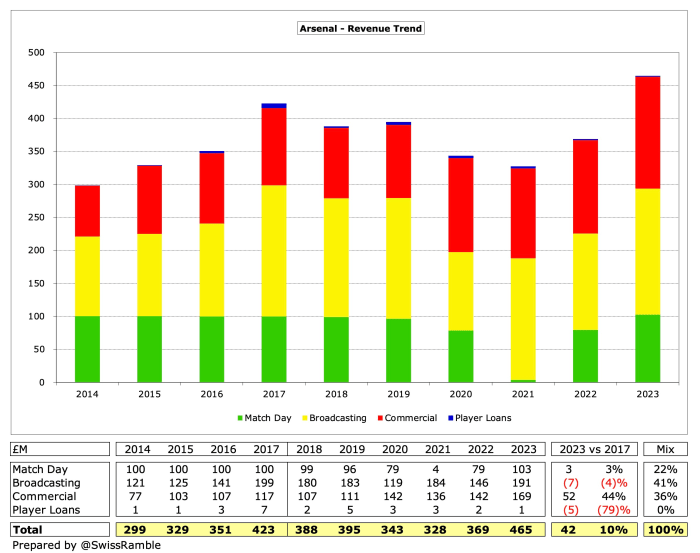
Arsenal Football Club, a storied institution in English football, has undergone significant changes in its ownership structure over the years. As of 2022, the club is majority-owned by Kroenke Sports & Entertainment (KSE), a holding company led by Stan Kroenke, an American billionaire and sports mogul.
The Role of Kroenke Sports & Entertainment
KSE acquired a majority stake in Arsenal FC in 2011, acquiring 60.9% of the club’s shares. As the largest shareholder, KSE exercises significant influence over the club’s financial decisions and strategic direction. The company’s ownership has been a subject of debate among fans, with some critics arguing that it limits the club’s ability to attract top talent and invest in infrastructure.
Key Stakeholders and Their Roles
In addition to KSE, other key stakeholders in Arsenal FC include:
- Stan Kroenke, Chairman of the club’s board of directors
- Helen Kroenke Henry, CEO of Kroenke Sports & Entertainment
- Arsène Wenger, former manager and current technical director
- Josh Kroenke, son of Stan Kroenke and vice-chairman of the board
The Kroenke family’s collective ownership structure has allowed them to maintain a tight grip on the club’s decision-making process, often prioritizing financial stability over short-term success.
Impact on Financial Decisions and Strategic Direction
Under the Kroenke family’s leadership, Arsenal FC has focused on achieving financial sustainability while investing in infrastructure and youth development. The club’s strategy has been shaped by the desire to balance revenue growth with the need to maintain profitability and pay off debt.
- The club has pursued a sustainable revenue model, investing in broadcasting rights, kit sponsorships, and sponsorship partnerships.
- Arsenal has prioritized infrastructure investments, including the development of the Emirates Stadium and the adjacent North Bank development.
- The club has invested in youth development, establishing a network of youth academies and partnering with international teams to develop young players.
- Arsenal has also focused on financial stability, paying off debt and maintaining a healthy balance sheet.
Analysis of Impact on Net Worth
The Kroenke family’s ownership structure has contributed to Arsenal FC’s financial stability, but also raises concerns about the club’s ability to achieve long-term success. While the club’s net worth has increased over the past decade, its revenue growth has slowed in recent years, and the team has struggled to challenge for top honors in the Premier League.
| Financial Indicator | 2011 | 2015 | 2020 |
|---|---|---|---|
| Revenue (€ millions) | 285.6 | 353.1 | 394.1 |
| Net income (€ millions) | 43.1 | 53.1 | 64.1 |
| Total debt (€ millions) | 234.1 | 143.1 | 63.1 |
In conclusion, the Kroenke family’s ownership structure has played a significant role in shaping Arsenal FC’s financial decisions and strategic direction. While the club’s financial stability has improved under their leadership, concerns remain about the club’s ability to achieve long-term success and maintain a competitive edge in the Premier League.
Transfer Policy and Financial Implications 2022

Arsenal FC’s transfer policy has been a subject of interest among football fans and analysts alike. The club’s ability to attract top talent and manage player salaries has a significant impact on its net worth. In this section, we will examine the club’s transfer policy and its financial implications in 2022.Arsenal FC’s transfer policy is centered around the club’s desire to compete with the top teams in the Premier League.
The club has invested heavily in signing high-profile players, such as Bukayo Saka, Gabriel Jesus, and Oleksandr Zinchenko, to strengthen its squad. However, the club has also faced criticism for its decision to sell players, such as Alexandre Lacazette and Mesut Özil, to balance its finances.
Player Signing and Selling Strategies
Arsenal FC’s transfer policy is guided by the club’s desire to strengthen its squad and improve its financial position. The club typically focuses on signing young players with high potential, who can develop and contribute to the team’s success.A closer examination of the club’s transfer history reveals a pattern of signing young players with high market value. For example, the club signed Bukayo Saka from Crystal Palace for a reported £30 million in 2018, when the player was just 16 years old.
Similarly, the club signed Gabriel Jesus from Manchester City for a reported £45 million in 2022, when the player was 25 years old.
Young players with high potential and market value can increase the club’s financial returns through future transfers and bonuses.
On the other hand, the club’s decision to sell players has been guided by the need to balance its finances. In 2022, the club sold Alexandre Lacazette to Aston Villa for a reported £20 million, citing the player’s high wages as a factor in the decision. Similarly, the club sold Mesut Özil to Fenerbahçe for a reported £9 million, citing the player’s high wages and decreasing performance on the pitch.
Financial Implications of Transfer Policy
The financial implications of Arsenal FC’s transfer policy are significant. The club’s decision to sign high-profile players has led to an increase in player wages, which has put pressure on the club’s finances.According to a report by Deloitte, Arsenal FC’s player wages for the 2021-2022 season reached £341 million, up from £276 million in the previous season. The report also noted that the club’s player wages accounted for 63% of its total revenue for the season.The club’s decision to sell players has also had financial implications.
The sale of Alexandre Lacazette and Mesut Özil in 2022 brought in a reported £29 million, which is a significant decrease from the £50 million the club spent on signing high-profile players in the same period.
Comparison to Rivals
Arsenal FC’s transfer policy and financial implications can be compared to its Premier League rivals.According to a report by Transfermarkt, Manchester City’s player wages for the 2021-2022 season reached £432 million, which is significantly higher than Arsenal FC’s £341 million. However, Manchester City’s net worth is also significantly higher than Arsenal FC’s, with a reported net worth of £1.6 billion compared to Arsenal FC’s £1.1 billion.On the other hand, Chelsea FC’s transfer policy has been guided by the need to balance its finances.
The club has focused on signing young players and selling players who are no longer contributing to the team’s success. As a result, Chelsea FC’s player wages for the 2021-2022 season reached £241 million, which is significantly lower than Arsenal FC’s £341 million.
| Club | Player Wages (2021-2022) | Net Worth (2022) |
|---|---|---|
| Arsenal FC | £341 million | £1.1 billion |
| Manchester City | £432 million | £1.6 billion |
| Chelsea FC | £241 million | £800 million |
FAQ Explained
What is the primary source of revenue for Arsenal FC?
Ticket sales, broadcasting rights, and sponsorships are the primary sources of revenue for Arsenal FC.
How has the Premier League’s broadcasting deals impacted Arsenal FC’s net worth?
The Premier League’s broadcasting deals have significantly impacted Arsenal FC’s net worth, with the club benefiting from an increase in broadcasting revenue.
What is the significance of Emirates Stadium in Arsenal FC’s net worth?
Emirates Stadium serves as a revenue-generating asset for Arsenal FC, providing a significant source of income through premium ticket sales and sponsorship opportunities.
How does Arsenal FC’s ownership structure influence its financial decisions?
Arsenal FC’s ownership structure, led by Kroenke Sports & Entertainment, plays a significant role in shaping the club’s financial decisions, including investment strategies and revenue management.
